
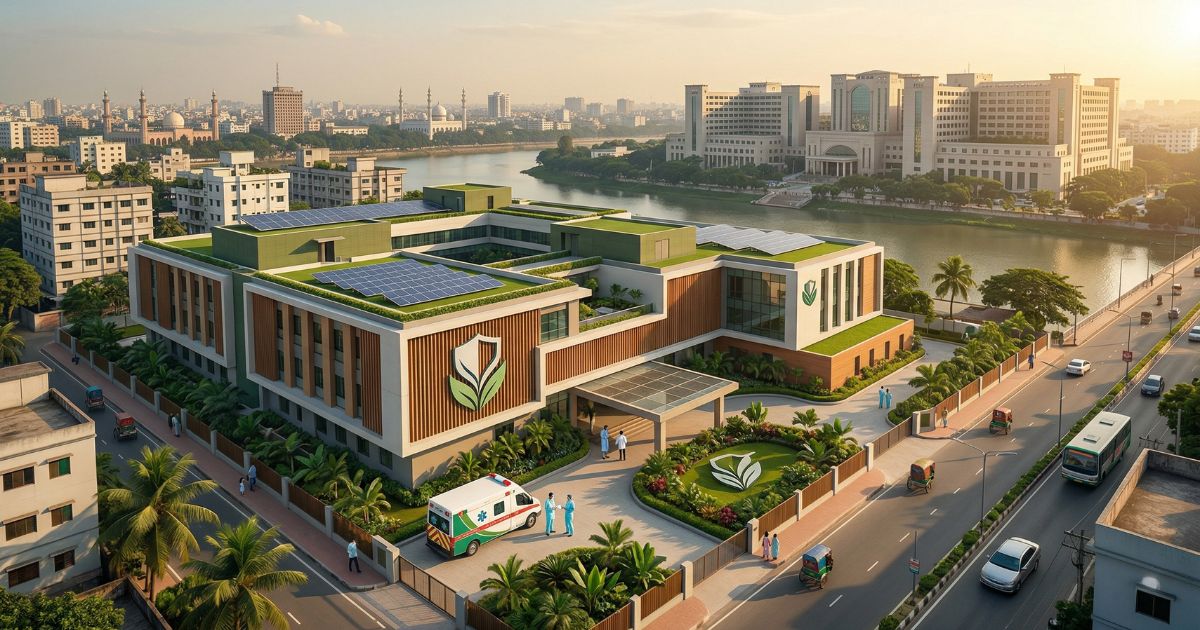
The $5 Billion Branding Problem
Let's start with the number that should keep every hospital owner in Bangladesh awake at night: $4 to $5 billion per year. That is how much Bangladeshi patients spend at hospitals in India, Singapore, Thailand, and Malaysia — money that could be staying in the local healthcare economy.
An estimated 450,000 to 800,000 Bangladeshis travel abroad for medical treatment annually. In 2024 alone, approximately 482,000 went to India — making Bangladesh the single largest source of India's medical tourism revenue. More than half of every medical tourist who walks into an Apollo or Fortis hospital in India is Bangladeshi.
The question every Bangladeshi hospital board should be asking is not "How do we build more beds?" It is: "Why do our patients trust Indian brands more than us — and what do we do about it?"
Because this is fundamentally a branding problem. Not a clinical skills problem. Not an equipment problem. A trust and perception problem.
"Bangladeshi hospitals are losing billions not because they cannot treat patients — but because they have not convinced patients they can. That is the most expensive branding failure in South Asian healthcare."
Bear My BrandWhat Apollo and Fortis Do That Bangladeshi Hospitals Do Not
Before you can compete, you need to understand exactly what you are competing against. Here is what India's top hospital brands do differently — and it has very little to do with better doctors.
1. They Invest Heavily in Brand Building
Apollo Hospitals spends approximately $15-20 million per year on marketing and brand building across their network of 73+ hospitals. Fortis Healthcare allocates 6-8% of revenue to marketing. Max Healthcare, Medanta, Manipal — they all treat branding as a core business function, not an afterthought.
In Bangladesh, most private hospitals spend less than 1% of revenue on marketing — and most of that goes to newspaper ads and billboards. There is no brand strategy, no digital presence strategy, no patient experience design. The investment gap is staggering.
2. They Own the Digital Space
Search "best cardiac hospital" on Google. Apollo, Fortis, and Medanta dominate the first page — not just for Indian queries, but for queries from Bangladesh, the Middle East, and Africa. Their websites are world-class: comprehensive department pages, individual doctor profiles with photos and credentials, patient testimonials, treatment cost estimators, virtual tours, online appointment booking, and international patient coordination portals.
Now search for any Bangladeshi hospital. Most have outdated websites with broken links, no doctor profiles, no patient testimonials, no online booking, and minimal content. Some of the largest hospitals in Dhaka have websites that look like they were built in 2010.
3. They Target Bangladeshi Patients Directly
Apollo and Fortis do not wait for patients to come to them. They actively market to Bangladeshi patients through:
- Facebook and Google ads targeting Bangladesh specifically
- Bangla-language landing pages and patient coordination
- Local agent networks in Dhaka, Chittagong, and Sylhet
- Free second-opinion services for Bangladeshi patients
- Airport pickup, accommodation, and visa assistance packages
- Dedicated Bangladeshi patient care coordinators who speak Bangla
Indian hospitals are marketing to your patients more aggressively than you are. And they are winning.
4. They Build Doctor Brands as Hospital Assets
Apollo does not just promote "Apollo Hospitals." They promote Dr. Reddy the cardiologist, Dr. Sharma the oncologist, Dr. Mehta the neurosurgeon. Each star doctor has their own profile page, their own content, their own brand — all under the Apollo umbrella. The doctor's reputation enhances the hospital's brand, and the hospital's infrastructure enhances the doctor's credibility.
In Bangladesh, hospitals rarely promote individual doctors. The doctor is invisible in the brand. Patients cannot research who will treat them, what their credentials are, or what their track record looks like. This anonymity kills trust.
5. They Design Patient Experience, Not Just Treatment
Walk into an Apollo hospital and notice the experience design: clean, modern interiors; clear wayfinding signage; friendly reception staff; comfortable waiting areas; digital check-in kiosks; real-time queue updates; transparent pricing displayed openly; post-discharge follow-up calls within 24 hours.
Now walk into many Bangladeshi hospitals: overcrowded lobbies, confusing layouts, rude or indifferent reception staff, unclear pricing, long waits with no communication, no follow-up after discharge. The contrast in experience is often more dramatic than any difference in clinical quality.
What Apollo/Fortis Do
- $15-20M annual marketing budget
- World-class website with 500+ pages of content
- Individual doctor brand profiles
- Bangla-language patient coordination
- Online appointment booking + cost estimator
- Professional facility design + wayfinding
- Systematic review + testimonial collection
- International patient coordination programs
- 24hr post-discharge follow-up calls
- SEO domination for health-related searches
What Most BD Hospitals Do
- <1% revenue on marketing (mostly newspaper ads)
- Outdated website with broken links
- Doctors invisible in hospital marketing
- No digital patient coordination
- Phone-only booking during business hours
- Overcrowded lobbies, confusing layouts
- No review management or testimonial strategy
- No international patient programs
- No post-discharge follow-up
- Zero SEO strategy or content marketing
The 8 Pillars of World-Class Hospital Branding
Here is the strategic framework for Bangladeshi hospitals that want to compete at the highest level. These are not optional — they are the minimum requirements for building a trusted hospital brand in 2026.
Pillar 1: Brand Strategy and Positioning
Every successful hospital brand starts with a clear answer to one question: "Why should a patient choose us over every other option — including going abroad?"
This is your positioning. And "we have good doctors" is not a positioning — every hospital says that. Your positioning needs to be specific, defensible, and meaningful to patients.
Examples of strong hospital positioning:
- "Bangladesh's leader in cardiac care" — own a specialty completely
- "The hospital that treats you like family" — own the patient experience
- "World-class treatment at Bangladeshi prices" — own the value equation
- "Where every diagnosis comes with a second opinion" — own transparency
Once you have a positioning, every decision — from website design to staff training to content strategy — should reinforce it. Consistency over time is what transforms a position into a brand.
Pillar 2: Visual Identity and Physical Branding
Your hospital's visual identity — logo, colors, typography, signage, uniforms, interior design — communicates your brand before anyone reads a word. Patients form trust judgments within seconds of seeing your building, your website, or your social media.
- Professional logo redesign — most Bangladeshi hospital logos look dated and generic. A modern, clean logo signals progressive healthcare.
- Consistent color system — applied across signage, uniforms, website, social media, stationery, and interiors.
- Wayfinding and signage — clear, modern, bilingual (Bangla + English) signage throughout the facility. Patients should never feel lost.
- Interior design upgrade — clean, modern waiting areas with comfortable seating, good lighting, and calming design. This is not luxury — it is trust signaling.
- Staff uniforms — professional, consistent, clean. Different colors for different departments for easy identification.
The single cheapest improvement with the biggest impact: deep clean and paint the lobby, reception area, and corridors. Add modern LED lighting and clear signage. This can be done in a weekend for BDT 200,000-500,000 and transforms patient first impressions instantly.
Pillar 3: Digital Presence — Website, SEO, and Social Media
Your website is your hospital's digital front door. In 2026, more patients will find you through Google than through any other channel. And if your digital presence is weak, you are invisible to the majority of potential patients.
Website requirements (non-negotiable):
- Modern, mobile-responsive design
- Department pages with detailed service descriptions
- Individual doctor profiles with photos, credentials, specializations, and patient reviews
- Patient testimonials and success stories (video preferred)
- Online appointment booking system
- Treatment cost information (at minimum, ranges)
- Virtual facility tour (photos or 360-degree video)
- Blog with regular health content (SEO)
- International patient information (for medical tourism)
- WhatsApp and live chat integration
SEO strategy:
Your hospital should appear on the first page of Google for searches like "best hospital in Dhaka," "cardiac surgery Bangladesh," "cancer treatment Dhaka," and every specialty you offer. This requires:
- Keyword research targeting patient search behavior
- Department and treatment pages optimized for specific conditions
- Regular blog content answering patient health questions
- Google Business Profile optimization for each location
- Local SEO targeting your city and neighborhood
Social media:
Facebook is the primary platform. YouTube is second. Your hospital social media should feature: doctor introduction videos, health education content, patient testimonials, facility tours, team highlights, and community health initiatives. Post 5-7 times per week with a mix of video and image content.
Pillar 4: Doctor Brand Building
Your doctors are your most valuable brand assets. Patients choose hospitals because of the doctors inside them. Yet most Bangladeshi hospitals treat doctors as interchangeable resources rather than brand ambassadors.
What to do:
- Create professional profile pages for every doctor on your website
- Produce introduction videos for your lead doctors in each department
- Encourage and support doctors in creating educational content under your hospital brand
- Feature doctor expertise in your marketing — not just the hospital name
- Help your star doctors build personal brands that enhance your hospital's reputation
When a patient can see the face, credentials, and content of the specific doctor who will treat them, trust increases dramatically. The anonymous hospital experience — "some doctor will see you" — is a trust killer.
Pillar 5: Patient Experience Design
Patient experience is the single most underinvested area in Bangladeshi healthcare — and the single biggest opportunity for differentiation. Every touchpoint in the patient journey is a branding opportunity.
Pre-visit experience:
- Easy online booking with confirmation SMS/WhatsApp
- Pre-visit information package (what to bring, what to expect, directions)
- Appointment reminders 24 hours before
On-site experience:
- Friendly, efficient reception with minimal wait to check in
- Comfortable, clean waiting areas with estimated wait times displayed
- Proactive communication about delays
- Bilingual signage and staff
- Patient navigators for complex cases
Clinical experience:
- Doctors who listen, explain in simple language, and spend adequate time
- Written treatment summaries given to every patient
- Clear explanation of costs before procedures
- Second opinions offered, not resisted
Post-visit experience:
- Follow-up call or WhatsApp within 24 hours
- Digital prescription and report delivery
- Automated reminders for follow-up appointments
- Review request with easy link to Google
"A patient's experience is not what happens in the examination room. It starts the moment they Google your name and ends weeks after they leave your building. Every moment in between is either building or breaking your brand."
Bear My BrandPillar 6: Reputation and Review Management
In 2026, your online reputation IS your reputation. A hospital with 500+ Google reviews at 4.5 stars has a massive trust advantage over one with 20 reviews at 3.8 stars — regardless of actual clinical quality.
- Systematic review collection: Train reception and nursing staff to request reviews from satisfied patients. Create QR codes at checkout.
- Respond to every review: Thank positive reviewers. Address negative reviews professionally and publicly, then resolve privately.
- Video testimonials: Collect 4-6 patient video testimonials per month. Feature them on website, social media, and in the waiting area.
- Monitor online mentions: Set up alerts for your hospital name across Google, Facebook, and local health forums.
- Address patterns, not just incidents: If multiple patients complain about wait times or rude staff, fix the systemic issue — not just the individual complaint.
Pillar 7: Staff Training and Internal Branding
Your brand is only as strong as the person a patient interacts with. Every receptionist, nurse, ward boy, technician, and security guard is a brand touchpoint. If your staff does not understand and embody your brand, no amount of marketing will save you.
- Brand orientation for all staff: Every employee should understand your hospital's positioning, values, and patient service standards.
- Communication training: Front-desk staff, nurses, and support staff need training in patient communication — empathy, active listening, de-escalation.
- Service standards: Document and train on specific standards — greeting patients by name, maximum acceptable wait times, follow-up procedures, complaint handling.
- Mystery patient program: Regularly send "mystery patients" to evaluate the real patient experience and identify gaps between your brand promise and reality.
The most common patient complaint about Bangladeshi hospitals is not clinical quality — it is staff behavior. Rude receptionists, inattentive nurses, unhelpful support staff. A single negative interaction with a non-clinical staff member can undo all the trust your doctors build. Investing in staff training delivers higher ROI than any marketing campaign.
Pillar 8: International Patient Programs (Medical Tourism)
Bangladesh has a massive opportunity to capture medical tourism rather than export it. With treatment costs 30-60% lower than India and skilled doctors, the missing piece is branding and patient coordination.
For hospitals targeting international patients (including Bangladeshis living abroad):
- Dedicated international patient page on your website (English, Arabic, Bangla)
- Online consultation and second-opinion services
- Transparent treatment cost packages
- Airport pickup and accommodation assistance
- Dedicated patient coordinator for international cases
- Post-discharge telemedicine follow-up
- JCI or equivalent international accreditation (long-term goal)
The 12-Month Hospital Branding Roadmap
You cannot transform a hospital brand overnight. Here is a realistic 12-month implementation plan:
Months 1-3: Foundation
- Conduct brand audit — survey patients, review online reputation, benchmark competitors
- Define brand positioning, visual identity, and brand guidelines
- Redesign website with all essential features (doctor profiles, booking, testimonials)
- Claim and optimize Google Business Profile for all locations
- Set up social media accounts with professional branding
- Launch systematic review collection process
- Begin staff communication training
Months 4-6: Build
- Launch content marketing — 3-5 social media posts per week, 2 blog posts per month
- Produce doctor introduction videos for top 10 specialists
- Implement patient experience improvements — lobby renovation, digital check-in, wait time communication
- Start SEO campaign targeting high-value treatment keywords
- Collect and publish first batch of video testimonials
- Launch paid digital advertising (Facebook + Google)
Months 7-9: Scale
- Scale content production — daily social media, weekly videos, bi-weekly blog posts
- Launch doctor personal branding program — help key doctors build their social media presence
- Implement post-discharge follow-up system (WhatsApp/SMS automation)
- Begin international patient program development
- Conduct first mystery patient audit and address gaps
- Review and optimize paid advertising based on data
Months 10-12: Optimize
- Analyze all branding KPIs — patient volume, online metrics, review scores, revenue impact
- Refine brand positioning based on patient feedback and market response
- Expand content strategy based on what is performing
- Plan next-year brand initiatives — facility upgrades, new specialties, expansion
- Benchmark progress against initial brand audit
- Document brand guidelines and training materials for long-term consistency
The Cost of Doing Nothing
Some hospital boards will read this and decide "we cannot afford to invest in branding right now." Here is what they are actually saying: "We are okay losing patients to Apollo and Fortis indefinitely."
Consider the math:
- If your hospital loses just 10 patients per month to medical tourism — patients who would have chosen you if they trusted you more — at an average treatment value of BDT 500,000, that is BDT 60 million per year in lost revenue.
- A comprehensive hospital branding program costs BDT 5-10 million per year.
- The ROI is not theoretical. It is mathematical.
The hospitals that invest in branding now will capture a disproportionate share of Bangladesh's projected $23 billion healthcare market by 2033. The ones that do not invest will watch their patient volumes decline as competitors — both domestic and international — out-brand them.
Right now, the hospital branding space in Bangladesh is wide open. Almost no one is doing it well. This means the first hospitals to invest seriously in brand building will establish themselves as the trusted leaders — and that advantage compounds over time. In 5 years, when everyone is trying to build a brand, the early movers will already own the market position, the SEO rankings, the social media following, and the patient trust that newcomers will spend years trying to replicate.
Bangladesh's Potential: From Medical Tourism Source to Destination
Here is the most exciting possibility: Bangladesh does not have to remain a medical tourism exporter forever. With the right investment in clinical quality, infrastructure, and branding, Bangladeshi hospitals can position themselves as regional healthcare destinations.
The advantages are real:
- Cost advantage: Treatments in Bangladesh cost 30-60% less than India and 70-80% less than Southeast Asia
- Clinical talent: Many Bangladeshi doctors trained at the same international institutions as their Indian and Singaporean counterparts
- Geographic proximity: Dhaka is within 2-3 hours of 500 million people in the region
- Growing diaspora: 10+ million Bangladeshis living abroad who would prefer treatment in their home country if they trusted the hospitals
- Government support: The Bangladesh government has identified medical tourism as a strategic priority
The missing piece is not skill. It is not infrastructure (which is rapidly improving). It is brand. The hospital or hospital group that cracks world-class branding in Bangladesh will not just compete with Apollo — they will build the country's first globally recognized healthcare brand.
That opportunity is worth far more than any branding investment.
"The question is not whether Bangladesh will produce a world-class hospital brand. The question is which hospital will have the vision and courage to build it first."
Bear My BrandFrequently Asked Questions
Common questions about hospital branding in Bangladesh.
Ready to Build a World-Class Hospital Brand?
Bear My Brand works with hospitals and healthcare organizations to build brands that compete globally — from strategy and identity to digital presence, patient experience design, and growth marketing.
Book a Free Strategy Call